





Category : Health and you
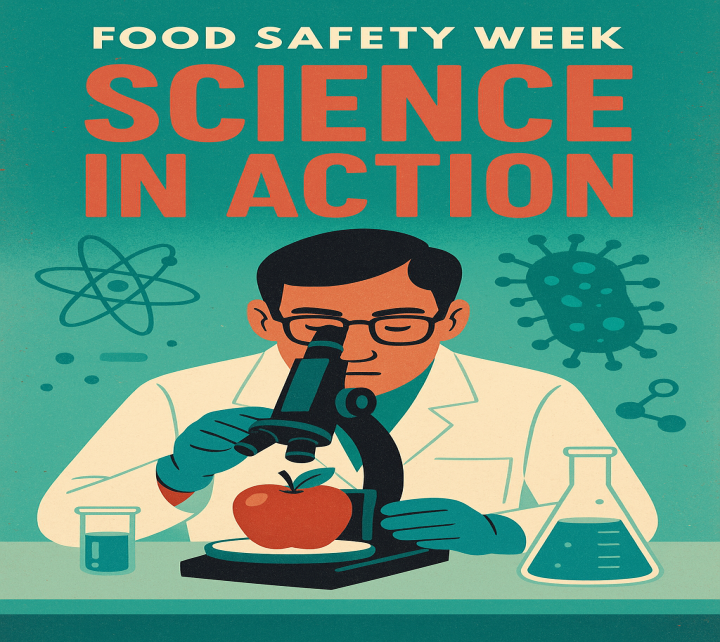
THEME: SCIENCE IN ACTION
To ensure that every bite of food we eat is nutritious and safe, food safety is a powerful fusion of science, policy, and human action. It is more than just washing vegetables and looking up expiration dates. As the topic “Science in Action” emphasizes, science plays a critical role in maintaining public health from farm to plate.
When science and awareness are combined, the result is a safer and healthier food system that benefits everyone.
Food Safety: The science behind it
From Farm to Plate: A Secure Journey
Every step of the food chain incorporates science
- On-farm: Using safe fertilizers, irrigating with clean water, and using veterinary medications sparingly.
- Hazard Analysis and Critical Control Points (HACCP), systems in processing plants detect possible hazards and put control measures in place.
- During Transportation: Perishable foods are kept at safe temperature.
- In our kitchens: The safety circle is completed by safe food handling procedures, such as proper preparation of vegetables and preventing cross-contamination.
Actions You Can Take
Science starts at home; beyond labs, you can engage with science in action.
- Keep cooked and raw foods separate.
- Hands should be washed before handling food.
- Be mindful of the storage guidelines and expiration dates.
- Learn how to read and understand nutrition labels.
As “Food Safety: Science in Action” reminds us, ensuring food safety is a shared responsibility that is driven by innovation, research, and our everyday choices. Food safety is the handling, cooking and storage of food in the best possible way to prevent food-borne illnesses.
FOUR SIMPLE STEPS AT HOME CAN HELP PROTECT THE FAMILY
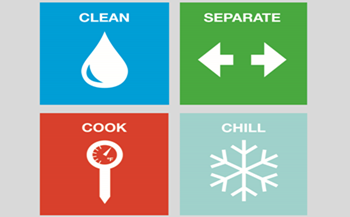
CLEAN
Wash Your Hands, Utensils, and Surfaces Often
Why? Germs can live on hands, food, surfaces and utensils.
- Wash your hands for at least 20 seconds with soap and plain water before, during and after preparing food and before eating.
- Wash cutting boards, dishes and countertops with hot, soapy water after each use.
- Rinse fruits/vegetables under running water (no soap or bleach).
SEPARATE: DON’T CROSS-CONTAMINATE
- Use separate cutting boards and utensils for
- Fresh vegetables and fruits or ready-to-eat foods
- Raw meat, poultry, seafood and eggs
- Replace cutting boards when worn.
- Always clean with hot, soapy water after use.
- Keep raw meat, poultry, seafood and eggs separate in shopping carts, bags and at home.
- Use sealed containers or leak-proof plastic bags.
- Store eggs in their original carton in the main fridge compartment.
COOK-TO THE RIGHT TEMPERATURE
- Food should be cooked to high temperature to kill germs that can make you sick
- Microwave food thoroughly
CHILL-REFRIGERATE CORRECTLY
- Refrigerate perishable food (meat, seafood, dairy, cut fruits, vegetables and cooked leftovers)within 2 hours
- Packaged hot foods should be transferred to utensils and then refrigerate
- Thaw frozen foods safely in cold water or in the oven. Never thaw food on the counter because bacteria multiply quickly once food reach to the room temperature.
DEPARTMENT OF NUTRITION AND DIETETICS
DIETICIAN
HARSHITHA K C